
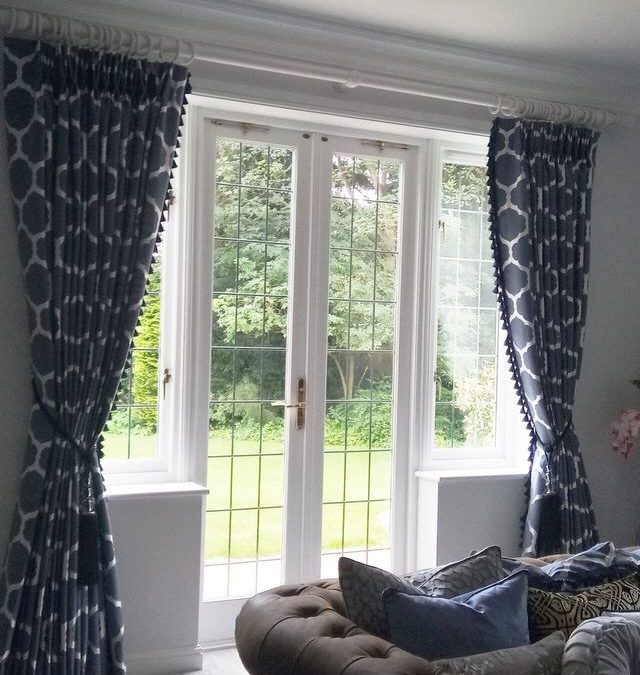
Most people pick curtains for how they look. The colour, the fabric, the way they fall. What almost no one thinks about is what’s behind them, the lining. And that’s exactly where you’re either saving money or losing every time you change them.
If your energy bills have crept up and you can’t figure out why, your windows are worth a second look. Not the glass itself, but what’s covering it. An unlined or poorly lined window treatment does almost nothing to prevent heat transfer in and out of your home. Especially in Florida, where the sun is relentless, and air conditioning runs nearly year-round. Not that’s a real cost.
The Hidden Role Your Curtain Lining Plays in Home Insulation
Your walls have insulation, and your roof probably does too. But your windows? Most homes treat them like an afterthought. Windows are one of the biggest sources of heat gain in any home, and in Florida, where sunlight comes in at high angles for most of the year, that problem is amplified.
Curtain lining acts as a barrier. It sits between your room and the glass, slowing down the transfer of heat. In summer, it keeps the warmth out. In those cooler winter months, it keeps the warmth trapped inside your home. The lining doesn’t replace your HVAC system. But it gives it less work to do. And less work means lower bills.
The reason most people don’t realise this is because it’s invisible. You never see the lining working. You just notice, eventually, that the room feels a bit cooler, or that the AC isn’t cycling on as often. It’s a quiet kind of efficiency.
Thermal vs. blackout vs. standard lining — what each one actually does
Not all linings are the same; each of them has a distinct personality, therefore choosing the wrong one can cost you more and leave you with little to no benefit at all. Here’s what actually separates them.
Standard lining is the most preferred window framing. It adds some body to the curtain and protects the fabric from sun damage, giving the home a cleaner look from the outside. But it offers minimal insulation. And if your sole goal is energy efficiency, then standard lining alone won’t work for you.
Blackout lining blocks light, almost entirely. It’s dense, tightly woven, and, as a result, blocks a significant amount of heat. And it’s excellent for bedrooms where you want no sunlight, but it works just as well in any south or west-facing room that takes a beating from afternoon sun. The added density means it holds its own as an insulator, too.
Thermal lining is where the real energy savings come in—made with a layer of acrylic foam or a similar insulating material bonded to the back. It creates an air pocket between the curtain and the window, which is exactly how insulation works; trapped air is a poor conductor of heat. In rooms where your AC has to work hardest, thermal lining is the most direct way to ease that load.
A right lining is more than just comfort. It’s about making an economically smart choice.
How lined drapes keep the heat out in summer and the warmth in during winter
Florida beaches never rest, and neither does the lighting sun. Therefore, a bare window solution here can cost you more than you might anticipate. How? Well, imagine yourself in Florida during the summer in June. When the sun hits your windows and the glass heats up, that heat radiates straight into your room. Your air conditioning kicks in harder to compensate. And this is how you end up paying more every day.
A well-lined curtain interrupts that process. The lining absorbs and reflects a portion of that radiant heat before it reaches the room. The effect is most noticeable in rooms with large windows or those facing south or west, exactly the rooms that tend to feel unbearable by 3 pm without intervention.
In winter, the same principle works in reverse. During the winters, the chilled air near the glass creates a “cold draft”, a downdraft that makes a room feel chilly even when the thermostat is set correctly. A heavy, lined curtain traps a layer of air against the glass, reducing that draft and keeping your heating from working overtime.
This is why the homes that feel most comfortable year-round are rarely the ones with the most expensive HVAC systems. They’re the ones where every part of the house, including the windows, has been carefully thought through.
The long-term savings you can expect from investing in the right lining
The upfront cost of properly lined curtains is higher than a basic off-the-shelf option. That’s true. But the comparison that matters isn’t upfront cost, it’s what you pay over three, five, or ten years.
Studies on window coverings consistently show that insulating window treatments can reduce heat gain through windows by a significant margin, in some cases cutting solar heat gain in half for south-facing windows. Over a full Florida summer, that kind of reduction in your cooling load adds up in a real, measurable way on your energy bill.
There’s also the less obvious saving, fabric longevity. Unlined curtains exposed to direct sunlight degrade fast. The colour fades, the weave weakens, and you’re replacing them far sooner than you’d like. A good lining protects the face fabric, so the curtains you invest in today still look the same in 8 years.
When people invest in custom curtains, Florida homes actually need properly measured, properly lined curtains made to fit the window exactly.
How to choose the best lining for your home’s specific needs
There’s no single answer that works for every room, which is part of why off-the-shelf solutions rarely perform as well as made-to-measure ones. The right lining depends on which way your windows face, how much direct sun they get, what the room is used for, and how you want it to feel.
South and west-facing rooms in Florida get the most intense sun. For these, thermal or blackout lining is worth prioritising. North-facing rooms tend to stay cooler naturally and may need less intervention; a good standard lining might be enough. Bedrooms are often where blackout lining makes the most practical sense, especially if you’re a light sleeper or have young children.
The fabric of the curtain itself matters too. Heavier fabrics paired with thermal lining perform better than lightweight fabrics with the same lining. If you’re choosing fabric and lining together, which is the advantage of going bespoke, those decisions can be made in tandem, rather than retrofitting a lining onto a fabric that wasn’t designed for it.
That’s where it pays to talk to someone who knows the craft. Not just the aesthetics, but the function. With over 20 years of experience making custom curtains, Florida homeowners trust Jem to bring both to every project.
Conclusion
Your curtains are working harder than you think. The lining of your curtains may be the part of the work that no one ever sees, but it may also be the part that matters most in terms of how your house feels and how much it costs to keep it.
If your house runs hot, your bills are too high, or your curtains are wearing out too fast, then your curtain lining may be a place to start. It’s not a difficult solution, but it does need to be the right solution for your house, your windows, and your living habits.